<?xml version="1.0" encoding="utf-8"?><feed xmlns="http://www.w3.org/2005/Atom" ><generator uri="https://jekyllrb.com/" version="3.9.5">Jekyll</generator><link href="https://globalrestoreproject.com/feed.xml" rel="self" type="application/atom+xml" /><link href="https://globalrestoreproject.com/" rel="alternate" type="text/html" /><updated>2024-02-21T09:41:27+01:00</updated><id>https://globalrestoreproject.com/feed.xml</id><title type="html">The Global Restore Project</title><subtitle>The Global Restore Project website.</subtitle><author><name>Global Restore Project</name></author><entry><title type="html">Unveiling the secrets of restoration tree plantings: a collaborative synthesis study</title><link href="https://globalrestoreproject.com/project%20news/Restoration-Tree_Plantings/" rel="alternate" type="text/html" title="Unveiling the secrets of restoration tree plantings: a collaborative synthesis study" /><published>2024-02-16T00:00:00+01:00</published><updated>2024-02-16T00:00:00+01:00</updated><id>https://globalrestoreproject.com/project%20news/Restoration-Tree_Plantings</id><content type="html" xml:base="https://globalrestoreproject.com/project%20news/Restoration-Tree_Plantings/"><![CDATA[<figure style="width: 400px" class="align-right">
  <img src="https://globalrestoreproject.com/assets/images/planted_tree.jpg" alt="" />
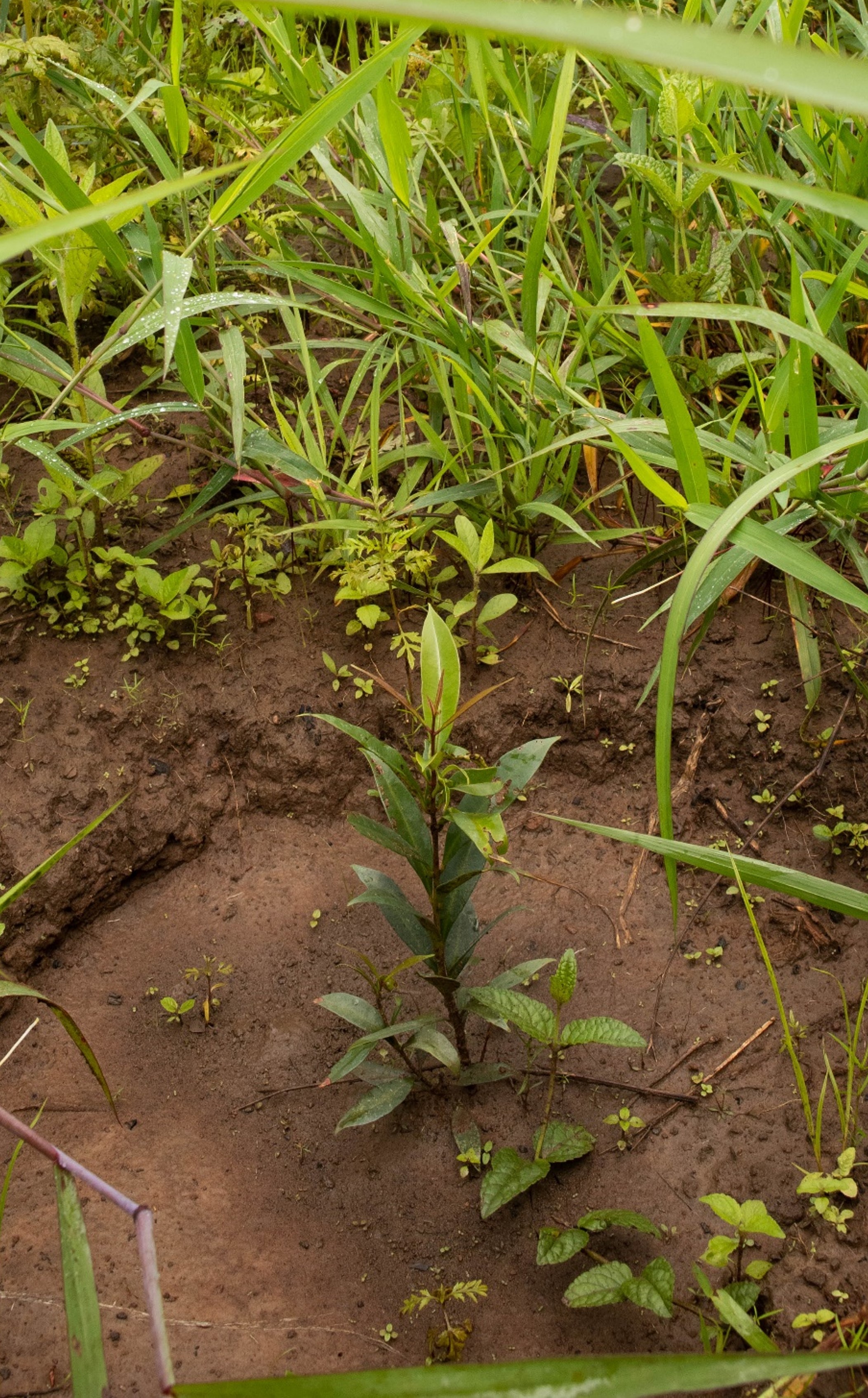
  <figcaption>The second best time to plant a tree is now.</figcaption>
</figure>
<p>In a collaborative effort aimed at enhancing the effectiveness of global restoration tree planting sites, the Global Restore Project is partnering with <a href="https://scholar.google.com/citations?user=RSNROwgAAAAJ&amp;hl=nl">Dr. Sybryn Maes</a>, a postdoctoral researcher affiliated with <a href="https://ees.kuleuven.be/eng/fnl/staff/index.html?group=FORECOMAN">KU Leuven in Belgium</a> and international restoration <a href="https://www.weforest.org/what-we-do/research/restoration-science/">NGO WeForest</a>. This project is currently focused on the resilience and restoration performance of tropical dry forests.</p>

<p><a href="https://www.instagram.com/tersybo/">Dr. Maes</a> will investigate context-dependent factors that may influence seedling performance by synthesizing monitoring data from seedlings in planting sites across the (sub)tropics. A specific emphasis in the site selection goes out to those areas that are often overlooked in existing planting syntheses, such as those on the African continent. Sybryn will investigate whether the following factors influence survival or growth rates in these planting sites: the functional identity of the planted species, the planting site’s environmental conditions (e.g. climate, forest type), the planting &amp; aftercare methods, and specific location.</p>

<figure style="width: 300px" class="align-left">
  <img src="https://globalrestoreproject.com/assets/images/cut_trees.jpg" alt="" />
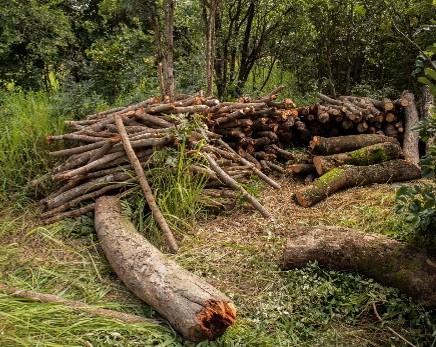
  <figcaption>Where deforestation has already happened, tree planting can help to replace what has already been lost.</figcaption>
</figure>

<p>Sybryn will analyze data from over 150 (sub)tropical sites spanning 20 countries and 6 continents, and more importantly, covering a diverse range of species and environmental conditions, but with comparable planting &amp; aftercare methods. This should provide a comprehensive understanding of planted seedling performance under various conditions.</p>

<figure style="width: 300px" class="align-right">
  <img src="https://globalrestoreproject.com/assets/images/forest.jpg" alt="" />
   <figcaption>How do we get from planted seedlings to a beautiful functioning forest resembling what was there in the past?.</figcaption>
</figure>

<p>While previous studies have explored relationships between environmental drivers and planting performance, the variability in findings across studies raises questions about the generalizability of these patterns. Moreover, there is a lack of studies incorporating the effects of (planting &amp;) aftercare methods, likely due to standardization challenges across studies. Therefore, this study specifically aims to (i) assess interactive effects among drivers to elucidate the generalizability of relationships, and (ii) include key aftercare treatments such as weeding, fertilization, or irrigation. By identifying ‘winner and loser’ species (traits), conditions, and aftercare methods, the findings will hopefully offer valuable insights for restoration project teams worldwide.</p>

<p>Thank you to all data contributors participating in this effort! The Global Restore Project is taking in tree planting datasets from other regions and biomes, and we have our eye on eventually expanding our syntheses across forests globally.</p>

<p><a href="mailto:sybryn.maes@kuleuven.be" class="btn btn--inverse btn--large align-left">Click here to get in touch with us &amp; find out more!</a></p>]]></content><author><name>Global Restore Project</name></author><category term="Project News" /><summary type="html"><![CDATA[The second best time to plant a tree is now. In a collaborative effort aimed at enhancing the effectiveness of global restoration tree planting sites, the Global Restore Project is partnering with Dr. Sybryn Maes, a postdoctoral researcher affiliated with KU Leuven in Belgium and international restoration NGO WeForest. This project is currently focused on the resilience and restoration performance of tropical dry forests. Dr. Maes will investigate context-dependent factors that may influence seedling performance by synthesizing monitoring data from seedlings in planting sites across the (sub)tropics. A specific emphasis in the site selection goes out to those areas that are often overlooked in existing planting syntheses, such as those on the African continent. Sybryn will investigate whether the following factors influence survival or growth rates in these planting sites: the functional identity of the planted species, the planting site’s environmental conditions (e.g. climate, forest type), the planting &amp; aftercare methods, and specific location. Where deforestation has already happened, tree planting can help to replace what has already been lost. Sybryn will analyze data from over 150 (sub)tropical sites spanning 20 countries and 6 continents, and more importantly, covering a diverse range of species and environmental conditions, but with comparable planting &amp; aftercare methods. This should provide a comprehensive understanding of planted seedling performance under various conditions. How do we get from planted seedlings to a beautiful functioning forest resembling what was there in the past?. While previous studies have explored relationships between environmental drivers and planting performance, the variability in findings across studies raises questions about the generalizability of these patterns. Moreover, there is a lack of studies incorporating the effects of (planting &amp;) aftercare methods, likely due to standardization challenges across studies. Therefore, this study specifically aims to (i) assess interactive effects among drivers to elucidate the generalizability of relationships, and (ii) include key aftercare treatments such as weeding, fertilization, or irrigation. By identifying ‘winner and loser’ species (traits), conditions, and aftercare methods, the findings will hopefully offer valuable insights for restoration project teams worldwide. Thank you to all data contributors participating in this effort! The Global Restore Project is taking in tree planting datasets from other regions and biomes, and we have our eye on eventually expanding our syntheses across forests globally. Click here to get in touch with us &amp; find out more!]]></summary></entry><entry><title type="html">Investigating Pollinator Networks In Europe</title><link href="https://globalrestoreproject.com/project%20news/Pollinator_Networks_In_Europe/" rel="alternate" type="text/html" title="Investigating Pollinator Networks In Europe" /><published>2023-10-22T00:00:00+02:00</published><updated>2023-10-22T00:00:00+02:00</updated><id>https://globalrestoreproject.com/project%20news/Pollinator_Networks_In_Europe</id><content type="html" xml:base="https://globalrestoreproject.com/project%20news/Pollinator_Networks_In_Europe/"><![CDATA[<figure style="width: 400px" class="align-right">
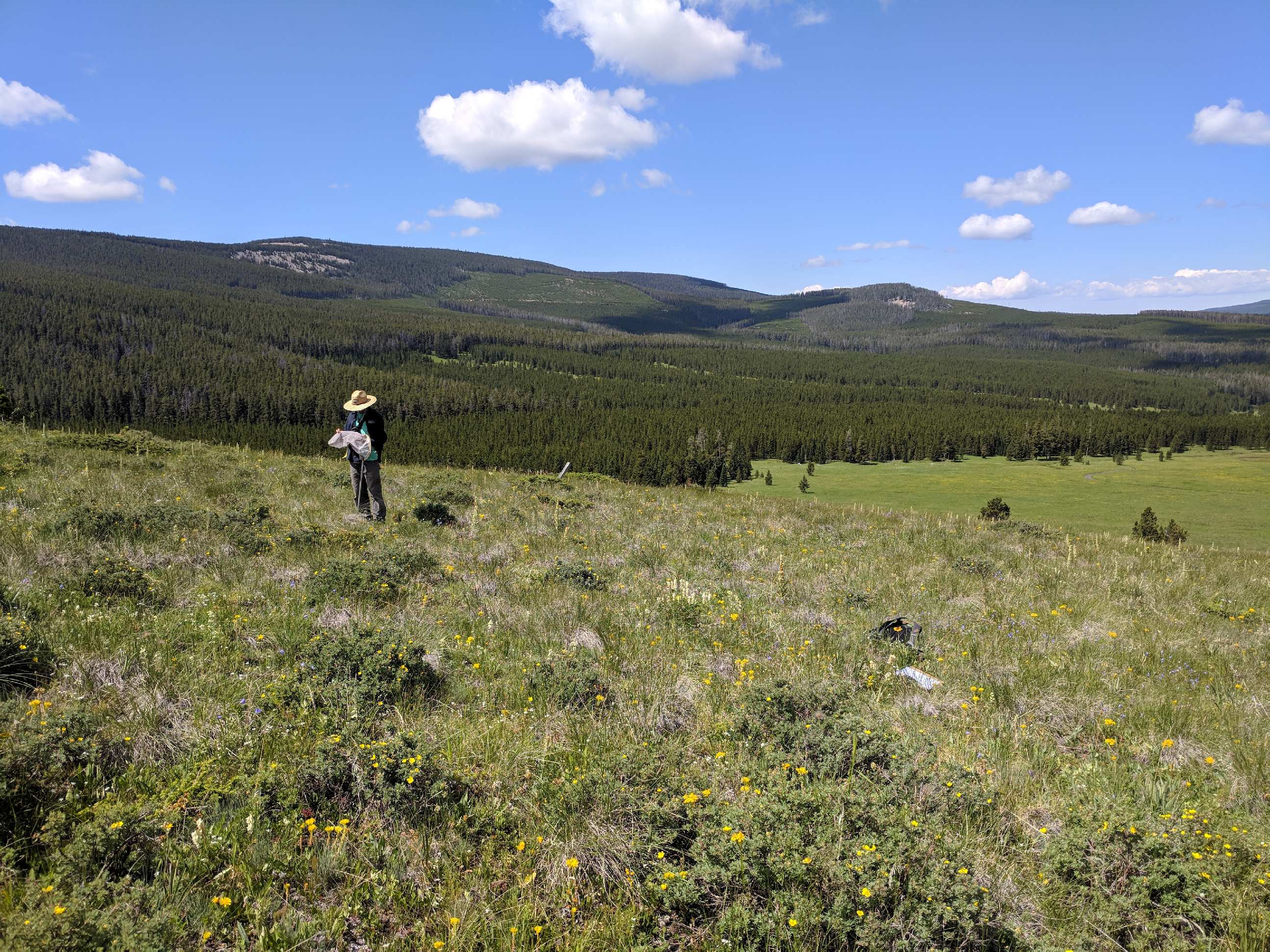
  <img src="https://globalrestoreproject.com/assets/images/will_glenny_catching.jpg" alt="" />
  <figcaption>Will Glenny, project lead, catching pollinators.</figcaption>
</figure>
<p>Insect pollinators are critical for the maintenance of biodiversity and functioning ecosystems, and pollinator declines globally require restoration strategies to reconnect plant-pollinator mutualisms. Seed mixes that are rich in flowering plant species are important to restore vegetation communities and provide the nectar and pollen resources required by insect pollinators. However, it remains unclear how reseeding landscapes influence the composition of pollinator communities and ultimately plant-pollinator interaction networks.</p>

<figure style="width: 300px" class="align-left">
  <img src="https://globalrestoreproject.com/assets/images/interaction_network.jpg" alt="" />
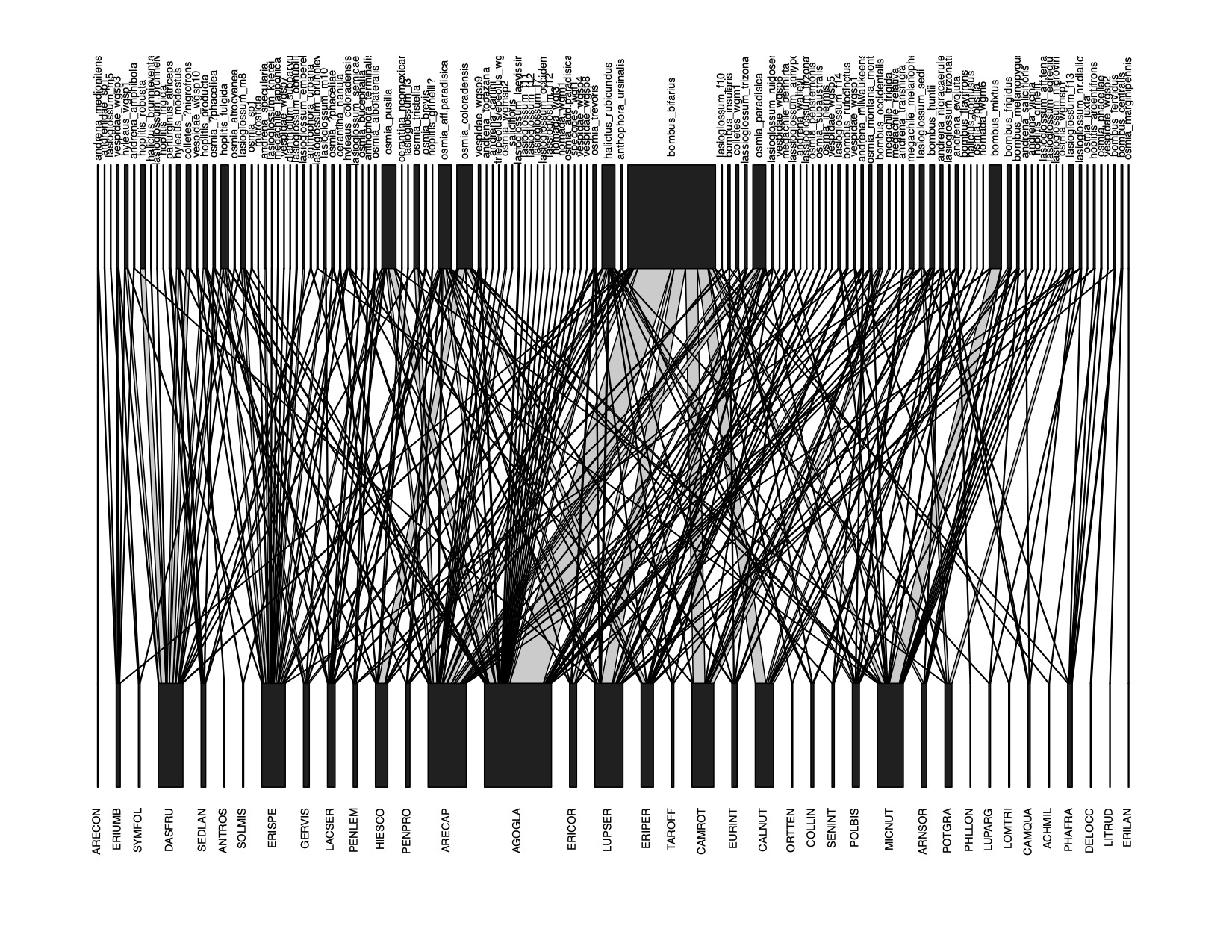
  <figcaption>A plant-pollinator interaction network. Interactions observed between bees (top) and flowers (bottom) are depicted by lines. Thicker lines indicate more frequent interactions between species.</figcaption>
</figure>

<p>Collaborating with the Global Restore Project, iDiv researchers are identifying locations across Europe that restored landscapes using seed mixes and traditional management practices, to understand how different restoration methods influence pollinator communities. Pollinator collections will begin at locations in the summer of 2024. We hypothesize that reseeded communities will result in more simplified networks compared to sites restored with traditional management, because seed mixes only revegetate areas with a subset of all available plant species and primarily benefit abundant and generalist bee species. We are always looking to enroll more locations within our study and would be <a href="mailto:william_robb.glenny@idiv.de">happy to start a dialogue if this project interests you</a>. As a part of this effort, we will plan an exciting <a href="https://www.idiv.de/en/groups-and-people/core-groups/spatial-interaction-ecology/summer-schools.html">pollinator summer school at iDiv for 2024</a>.</p>

<figure style="width: 300px" class="align-right">
  <img src="https://globalrestoreproject.com/assets/images/will_glenny.jpg" alt="" />
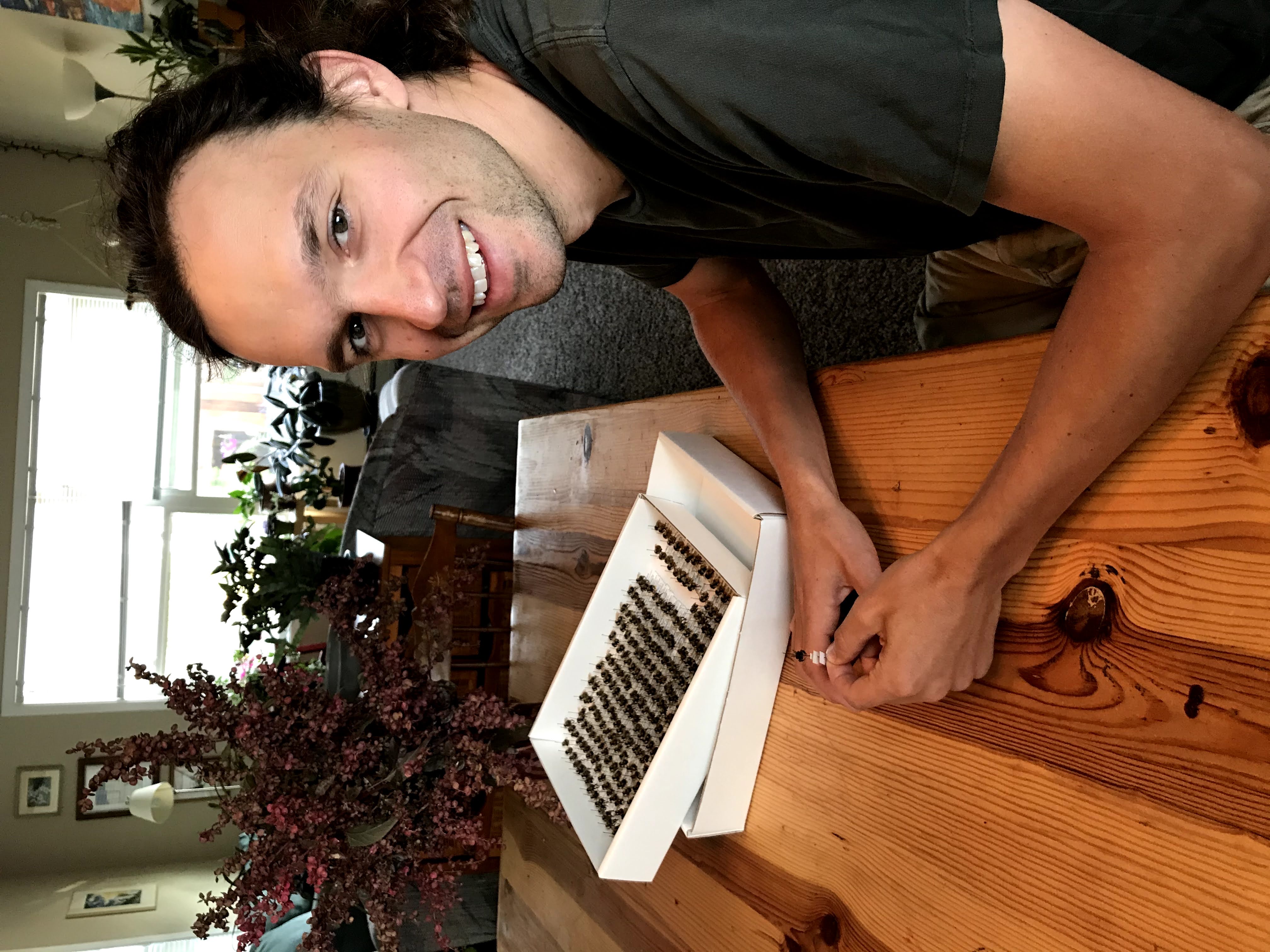
   <figcaption>Will Glenny, project lead.</figcaption>
</figure>

<p>This study is led by Dr. Will Glenny (Alexander von Humboldt post-doctoral fellow) who is a part of the <a href="https://www.idiv.de/en/groups-and-people/core-groups/spatial-interaction-ecology/team.html">Spatial Interaction Ecology group led by Prof. Dr. Tiffany Knight</a> at the German Centre for Integrative Biodiversity Research (iDiv) in Leipzig, Germany. Will completed his PhD at Montana State University in Bozeman, Montana, USA, where his research helped improve <a href="https://doi.org/10.1002/fee.2595">the selection of plant species for pollinator habitat restoration in large, semi-natural ecosystems</a>.</p>

<p><a href="mailto:william_robb.glenny@idiv.de" class="btn btn--inverse btn--large align-left">Click here to get in touch with us &amp; find out more!</a></p>]]></content><author><name>Global Restore Project</name></author><category term="Project News" /><summary type="html"><![CDATA[Will Glenny, project lead, catching pollinators. Insect pollinators are critical for the maintenance of biodiversity and functioning ecosystems, and pollinator declines globally require restoration strategies to reconnect plant-pollinator mutualisms. Seed mixes that are rich in flowering plant species are important to restore vegetation communities and provide the nectar and pollen resources required by insect pollinators. However, it remains unclear how reseeding landscapes influence the composition of pollinator communities and ultimately plant-pollinator interaction networks. A plant-pollinator interaction network. Interactions observed between bees (top) and flowers (bottom) are depicted by lines. Thicker lines indicate more frequent interactions between species. Collaborating with the Global Restore Project, iDiv researchers are identifying locations across Europe that restored landscapes using seed mixes and traditional management practices, to understand how different restoration methods influence pollinator communities. Pollinator collections will begin at locations in the summer of 2024. We hypothesize that reseeded communities will result in more simplified networks compared to sites restored with traditional management, because seed mixes only revegetate areas with a subset of all available plant species and primarily benefit abundant and generalist bee species. We are always looking to enroll more locations within our study and would be happy to start a dialogue if this project interests you. As a part of this effort, we will plan an exciting pollinator summer school at iDiv for 2024. Will Glenny, project lead. This study is led by Dr. Will Glenny (Alexander von Humboldt post-doctoral fellow) who is a part of the Spatial Interaction Ecology group led by Prof. Dr. Tiffany Knight at the German Centre for Integrative Biodiversity Research (iDiv) in Leipzig, Germany. Will completed his PhD at Montana State University in Bozeman, Montana, USA, where his research helped improve the selection of plant species for pollinator habitat restoration in large, semi-natural ecosystems. Click here to get in touch with us &amp; find out more!]]></summary></entry><entry><title type="html">The Hierarchy of Predictability</title><link href="https://globalrestoreproject.com/publications/The-Hierarchy_of_Predictability/" rel="alternate" type="text/html" title="The Hierarchy of Predictability" /><published>2023-10-02T00:00:00+02:00</published><updated>2023-10-02T00:00:00+02:00</updated><id>https://globalrestoreproject.com/publications/The-Hierarchy_of_Predictability</id><content type="html" xml:base="https://globalrestoreproject.com/publications/The-Hierarchy_of_Predictability/"><![CDATA[<p>A recent publication in Ecological Applications used open-access North American data collected as apart of GRP database <a href="https://doi.org/10.1002/eap.2922">to test the “hierarchy of predictability” hypothesis</a>.</p>

<p class="notice"><em>This <a href="https://doi.org/10.1111/1365-2664.12935">hypothesis states that</a> different restoration outcomes, such as species diversity or physical structure, would be differently predictable according to an order from coarse to fine community properties, and that predictability of restoration outcomes would increase with more severe environmental conditions constraining species establishment.</em></p>

<p>Using data from seed-based restoration projects in the United States located along an aridity gradient, we encountered mixed support for the hypothesis. While fine-scale outcomes such as species composition followed the original hypothesis, other outcomes such as functional composition were less predictable in more arid sites. Based on our results, we discuss additional factors that might influence the predictability of restoration outcomes beyond those originally proposed in the hypothesis, and emphasize the importance of continuous monitoring and active management beyond one-time seed addition for successful grassland restoration in the United States.</p>

<figure style="width: 300px" class="align-right">
  <img src="https://globalrestoreproject.com/assets/images/team/diana_bertuol_garcia_wide.jpg" alt="" />
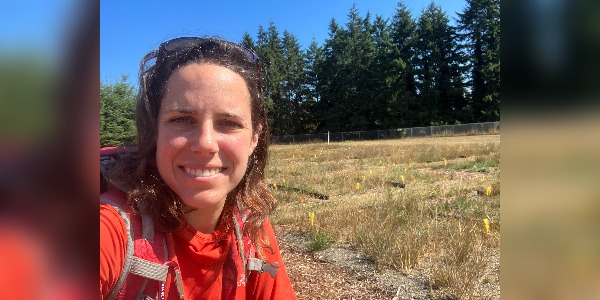
  <figcaption>Diana in the field.</figcaption>
</figure>

<p>This study was led by Diana Bertuol-Garcia, a PhD Candidate at the University of Victoria, working under the supervision of Dr. Nancy Shackelford. Diana’s research spans restoration and community ecology, focusing on the trait-based drivers of grassland resilience to drought and the potential implications for grassland restoration in the face of climate change. For her work on this paper, Diana earned the 3rd place in the Early Career Publication Award of the Ecological Society of America restoration section. She has also been awarded the Organization of American States Graduate Scholarship and the Lorene Kennedy Field Award from the School of Environmental Studies at the University of Victoria.</p>

<h3 id="see-original-paper"><em>See original paper:</em></h3>
<ul class="notice">
  <li>Diana Bertuol-Garcia, Emma Ladouceur, Lars A. Brudvig, Daniel C. Laughlin, Seth M. Munson, Michael F. Curran, Kirk W. Davies, Lauren N. Svejcar, Nancy Shackelford <strong>2023</strong> <a href="https://doi.org/10.1002/eap.2922">Testing the hierarchy of predictability in grassland restoration across a gradient of environmental severity</a> <strong>Ecological Applications</strong></li>
</ul>]]></content><author><name>Global Restore Project</name></author><category term="Publications" /><summary type="html"><![CDATA[A recent publication in Ecological Applications used open-access North American data collected as apart of GRP database to test the “hierarchy of predictability” hypothesis. This hypothesis states that different restoration outcomes, such as species diversity or physical structure, would be differently predictable according to an order from coarse to fine community properties, and that predictability of restoration outcomes would increase with more severe environmental conditions constraining species establishment. Using data from seed-based restoration projects in the United States located along an aridity gradient, we encountered mixed support for the hypothesis. While fine-scale outcomes such as species composition followed the original hypothesis, other outcomes such as functional composition were less predictable in more arid sites. Based on our results, we discuss additional factors that might influence the predictability of restoration outcomes beyond those originally proposed in the hypothesis, and emphasize the importance of continuous monitoring and active management beyond one-time seed addition for successful grassland restoration in the United States. Diana in the field. This study was led by Diana Bertuol-Garcia, a PhD Candidate at the University of Victoria, working under the supervision of Dr. Nancy Shackelford. Diana’s research spans restoration and community ecology, focusing on the trait-based drivers of grassland resilience to drought and the potential implications for grassland restoration in the face of climate change. For her work on this paper, Diana earned the 3rd place in the Early Career Publication Award of the Ecological Society of America restoration section. She has also been awarded the Organization of American States Graduate Scholarship and the Lorene Kennedy Field Award from the School of Environmental Studies at the University of Victoria. See original paper: Diana Bertuol-Garcia, Emma Ladouceur, Lars A. Brudvig, Daniel C. Laughlin, Seth M. Munson, Michael F. Curran, Kirk W. Davies, Lauren N. Svejcar, Nancy Shackelford 2023 Testing the hierarchy of predictability in grassland restoration across a gradient of environmental severity Ecological Applications]]></summary></entry><entry><title type="html">Posters &amp;amp; Conferences</title><link href="https://globalrestoreproject.com/about%20us/Poster_Conferences/" rel="alternate" type="text/html" title="Posters &amp;amp; Conferences" /><published>2023-09-20T00:00:00+02:00</published><updated>2023-09-20T00:00:00+02:00</updated><id>https://globalrestoreproject.com/about%20us/Poster_Conferences</id><content type="html" xml:base="https://globalrestoreproject.com/about%20us/Poster_Conferences/"><![CDATA[<p>We’ve attended some very nice conferences over the last couple of years. This includes the ‘Frontiers in Experimental Research’ conference hosted by UFZ in Leipzig, and Society for Ecological Restoration (SER) Europe in Alicante, Spain in 2022. We attended the Ecological Society of America conference in Portland Oregon, as well as the Ecological Society of Germany, Austria and Switzerland in Leipzig in 2023.</p>

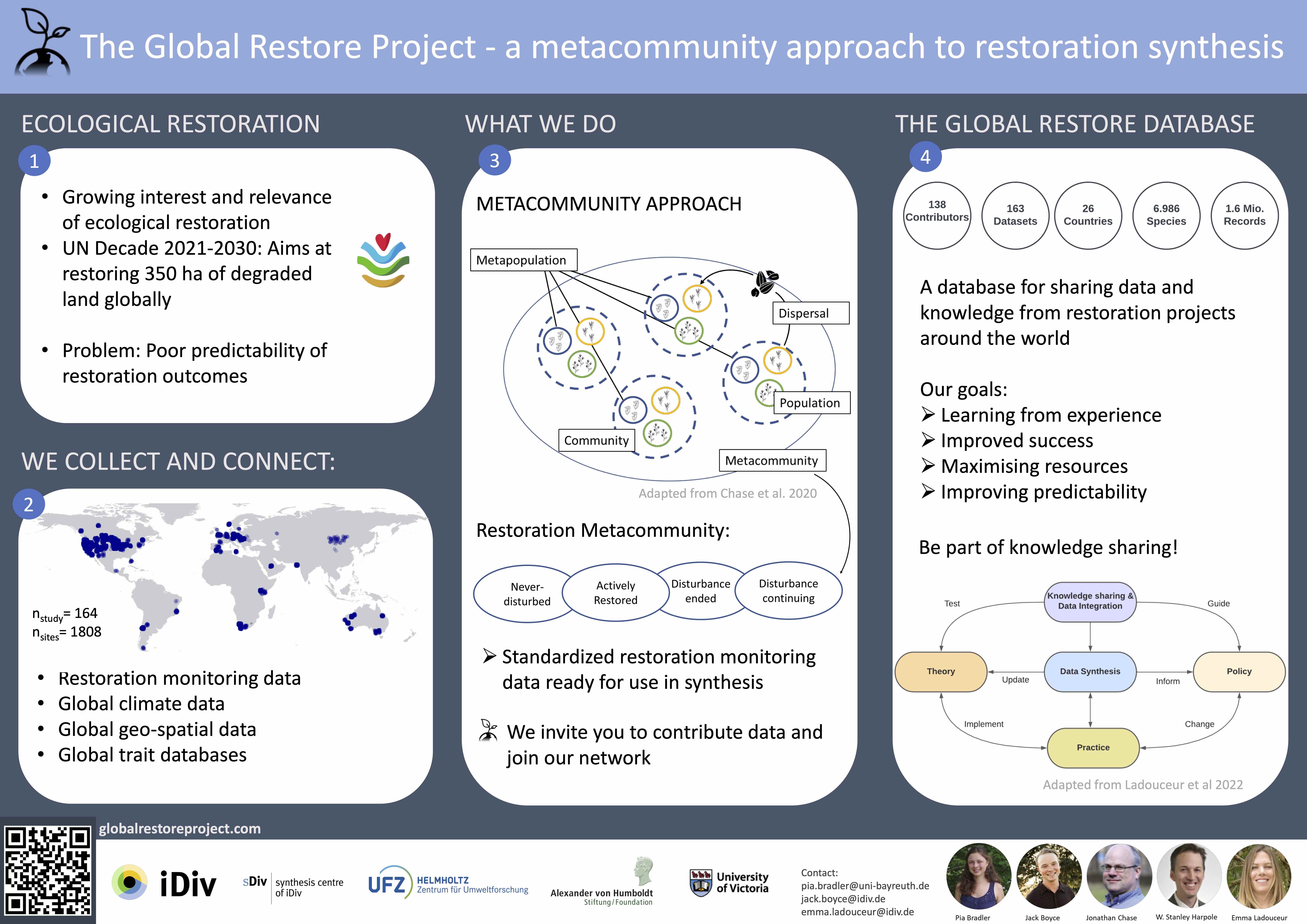
<p>Pia Bradler made us this nice poster in 2022 when she was interning with us and we attended the Frontiers in Environmental Research conference together. Pia is now a PhD student with the BetaFor project at Leuphana University. We will continue to update this great poster and adapt it for different purposes into the future.</p>

<figure style="width: 1000px" class="align-center">
  <img src="https://globalrestoreproject.com/assets/images/GRP_poster.jpg" alt="" />
  <figcaption>A nice visual summary of what we are all about!.</figcaption>
</figure>]]></content><author><name>Global Restore Project</name></author><category term="About Us" /><summary type="html"><![CDATA[We’ve attended some very nice conferences over the last couple of years. This includes the ‘Frontiers in Experimental Research’ conference hosted by UFZ in Leipzig, and Society for Ecological Restoration (SER) Europe in Alicante, Spain in 2022. We attended the Ecological Society of America conference in Portland Oregon, as well as the Ecological Society of Germany, Austria and Switzerland in Leipzig in 2023. Pia Bradler made us this nice poster in 2022 when she was interning with us and we attended the Frontiers in Environmental Research conference together. Pia is now a PhD student with the BetaFor project at Leuphana University. We will continue to update this great poster and adapt it for different purposes into the future. A nice visual summary of what we are all about!.]]></summary></entry><entry><title type="html">sDiv Projects</title><link href="https://globalrestoreproject.com/project%20news/sDiv/" rel="alternate" type="text/html" title="sDiv Projects" /><published>2023-07-11T00:00:00+02:00</published><updated>2023-07-11T00:00:00+02:00</updated><id>https://globalrestoreproject.com/project%20news/sDiv</id><content type="html" xml:base="https://globalrestoreproject.com/project%20news/sDiv/"><![CDATA[<p><img src="https://globalrestoreproject.com/assets/images/sDivLogo-black.png" alt="image-center" class="align-center" /></p>

<p>sDiv is the <a href="https://www.idiv.de/en/sdiv.html">Synthesis Centre of iDiv</a>.</p>

<p>The sDiv SynFlex flexible funding mechanism helped give our project the <a href="https://www.idiv.de/en/profile/1603.html">research support</a> it needed for our long-term vision, without explicitly needing to fund meetings and working group members to fly here to iDiv.</p>

<p>Our project, <a href="https://www.idiv.de/en/srestores.html">sReStoReS - Restoration Synthesis to Reimagine Success</a>, helped us to hire extra support and engage new folks in our next phase. See more details about our project featured in the sDiv 2023 <a href="https://www.idiv.de/en/srestores.html">newsletter</a>.</p>

<p>We are excited to be apart of, and supporting three sDiv working groups:</p>
<ul>
  <li><a href="https://www.idiv.de/en/storation.html">sToration - Applying Coexistence Theory to Restoration Ecology and Adaptive Management</a></li>
  <li><a href="https://www.idiv.de/en/spriority.html">sPriority - Mechanisms and Quantification of Priority Effects</a></li>
  <li><a href="https://www.idiv.de/en/sfutures.html">sFutures - Integrating functional and phylogenetic underpinnings into restoration science</a></li>
</ul>

<p>We are working hard on the outcomes through 2024 and are excited to share the resulting work on our open science page and in our news. Stay tuned!</p>]]></content><author><name>Global Restore Project</name></author><category term="Project News" /><summary type="html"><![CDATA[sDiv is the Synthesis Centre of iDiv. The sDiv SynFlex flexible funding mechanism helped give our project the research support it needed for our long-term vision, without explicitly needing to fund meetings and working group members to fly here to iDiv. Our project, sReStoReS - Restoration Synthesis to Reimagine Success, helped us to hire extra support and engage new folks in our next phase. See more details about our project featured in the sDiv 2023 newsletter. We are excited to be apart of, and supporting three sDiv working groups: sToration - Applying Coexistence Theory to Restoration Ecology and Adaptive Management sPriority - Mechanisms and Quantification of Priority Effects sFutures - Integrating functional and phylogenetic underpinnings into restoration science We are working hard on the outcomes through 2024 and are excited to share the resulting work on our open science page and in our news. Stay tuned!]]></summary></entry><entry><title type="html">Europen Research Council Advanced Project</title><link href="https://globalrestoreproject.com/project%20news/ERC/" rel="alternate" type="text/html" title="Europen Research Council Advanced Project" /><published>2023-03-30T00:00:00+02:00</published><updated>2023-03-30T00:00:00+02:00</updated><id>https://globalrestoreproject.com/project%20news/ERC</id><content type="html" xml:base="https://globalrestoreproject.com/project%20news/ERC/"><![CDATA[<p>We are part of a newly funded <a href="https://www.idiv.de/en/news/news_single_view/5129.html">European Research Council (ERC) Advanced Grant</a>, ‘MetaChange: Biodiversity change across time and space in the Anthropocene: Leveraging Metacommunity modelling, land-use Change, &amp; open data to achieve deeper understanding’</p>

<p>Emma will continue to work on this project as a part of this team at iDiv with Jon Chase, PI of the grant, and with the <a href="https://www.idiv.de/en/groups-and-people/core-groups/synthesis/people.html">Biodiversity Synthesis group at iDiv</a>.</p>

<p>Stay tuned!</p>

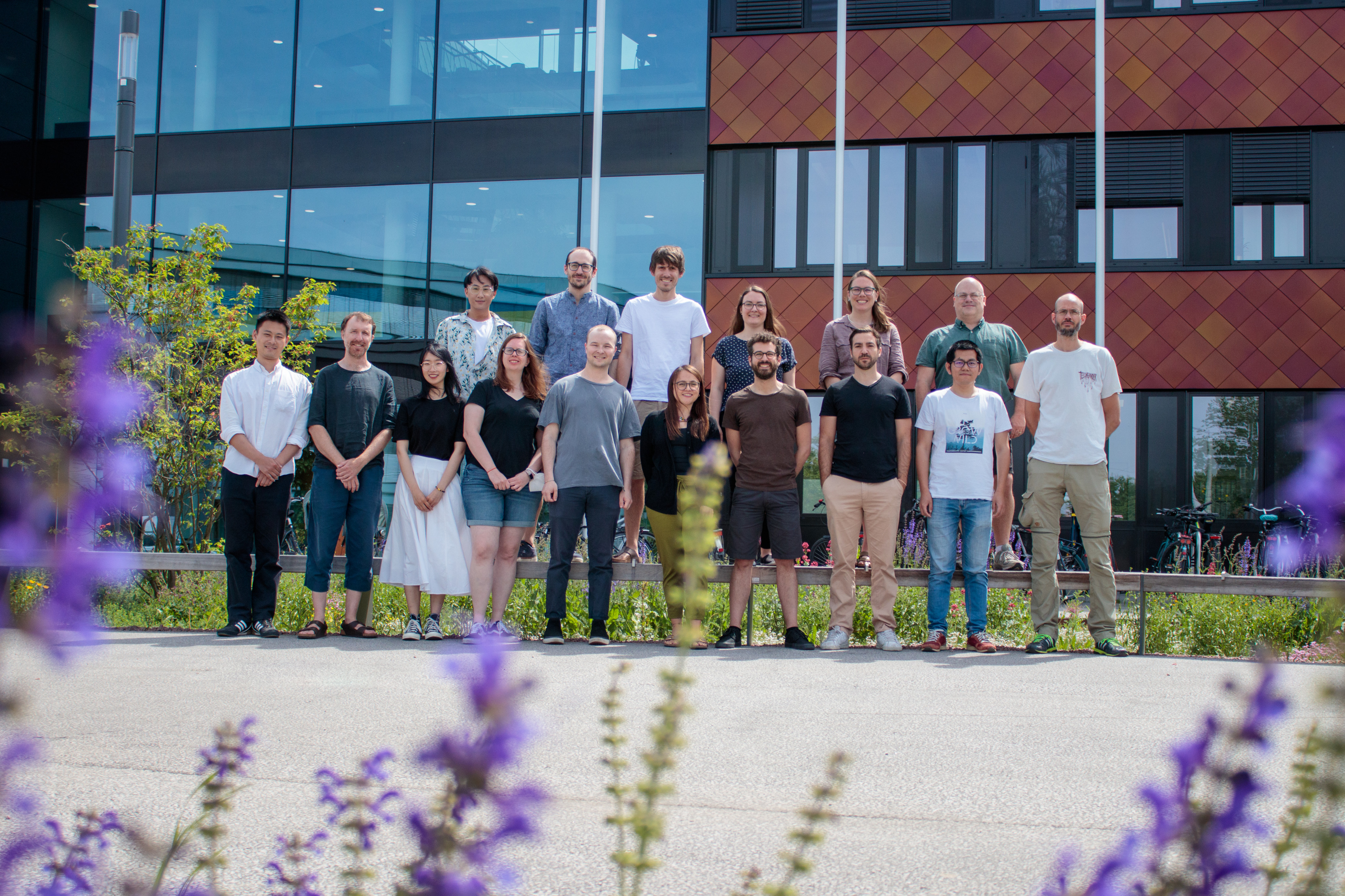
<p><img src="https://globalrestoreproject.com/assets/images/Biodiversity-Synthesis_group photo2.jpg" alt="image-center" class="align-center" /></p>

<figure class="align-center">
  <img src="https://globalrestoreproject.com/assets/images/Biodiversity-Synthesis_group photo2.jpg)" alt="" />
  <figcaption>The Biodiversity Synthesis Group in front of the iDiv building in 2022.</figcaption>
</figure>]]></content><author><name>Global Restore Project</name></author><category term="Project News" /><summary type="html"><![CDATA[We are part of a newly funded European Research Council (ERC) Advanced Grant, ‘MetaChange: Biodiversity change across time and space in the Anthropocene: Leveraging Metacommunity modelling, land-use Change, &amp; open data to achieve deeper understanding’ Emma will continue to work on this project as a part of this team at iDiv with Jon Chase, PI of the grant, and with the Biodiversity Synthesis group at iDiv. Stay tuned! The Biodiversity Synthesis Group in front of the iDiv building in 2022.]]></summary></entry><entry><title type="html">Knowledge Sharing for Shared Success</title><link href="https://globalrestoreproject.com/publications/Knowledge_Sharing/" rel="alternate" type="text/html" title="Knowledge Sharing for Shared Success" /><published>2022-02-25T00:00:00+01:00</published><updated>2022-02-25T00:00:00+01:00</updated><id>https://globalrestoreproject.com/publications/Knowledge_Sharing</id><content type="html" xml:base="https://globalrestoreproject.com/publications/Knowledge_Sharing/"><![CDATA[<figure style="width: 450px" class="align-right">
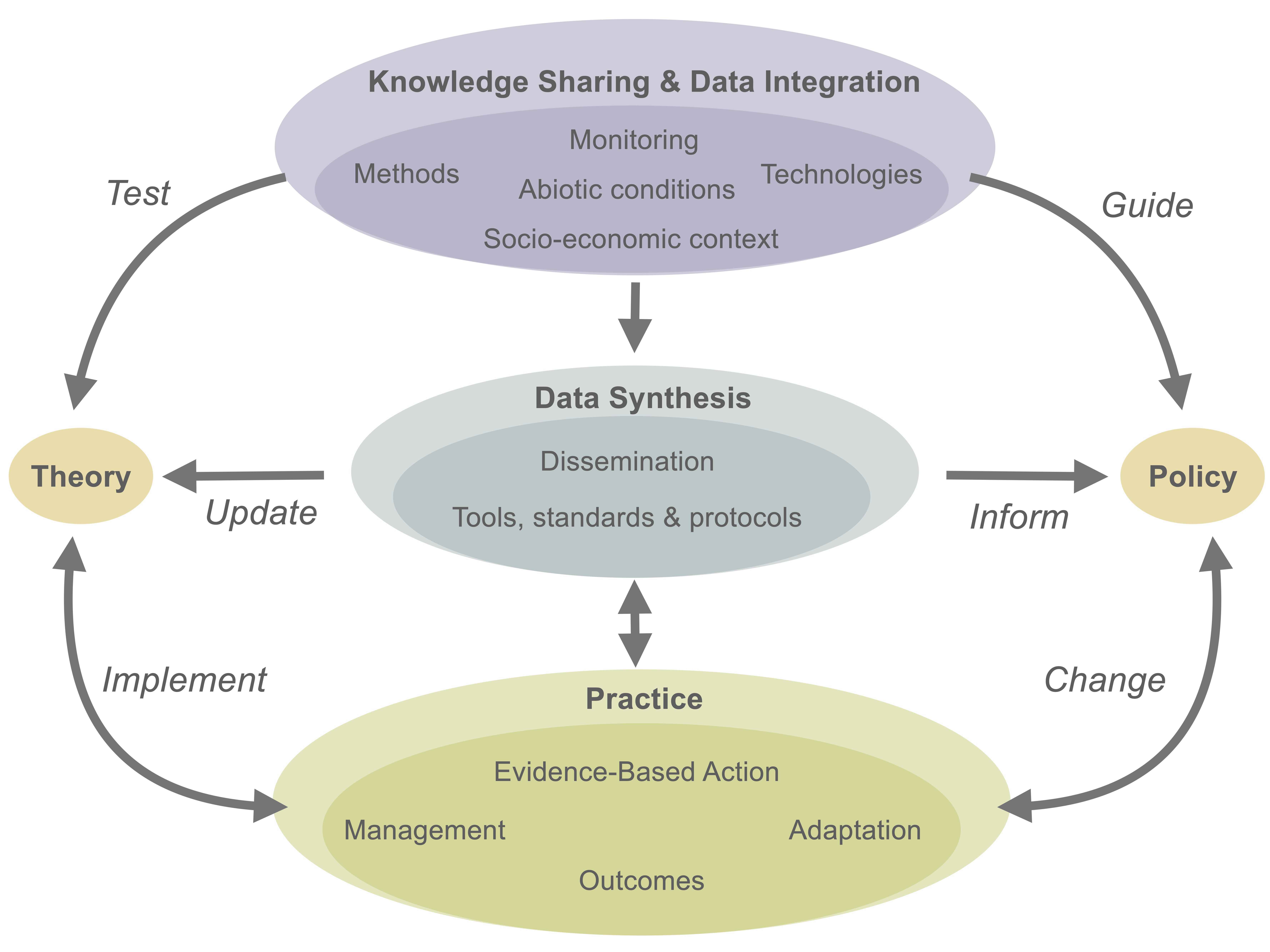
  <img src="https://globalrestoreproject.com/assets/images/Knowledge_Sharing_Figure_2.jpg" alt="" />
  <figcaption>Change through sharing.</figcaption>
</figure>
<p>In our recent publication, we highlight how knowledge sharing can lead to increased and shared success in the UN Decade on Ecosystem Restoration (2021-2030). We call for increased effort to collate species-level, fine-scale, ecological community data from restoration studies across a wide range of environmental and ecological gradients. These data could be made openly available to the restoration community to maximize evidence-based knowledge sharing and support predictive capacity in ecological community responses to restoration actions.</p>

<p>Check out this cool video about it made by Magda Garbowski &amp; Emma :</p>
<blockquote class="twitter-tweet"><p lang="en" dir="ltr">Knowledge sharing for shared success in the decade on ecosystem restoration <br /><br />Now open access in new <a href="https://twitter.com/BritishEcolSoc?ref_src=twsrc%5Etfw">@BritishEcolSoc</a> Journal, Ecological Solutions and Evidence <a href="https://twitter.com/AER_ESE_BES?ref_src=twsrc%5Etfw">@AER_ESE_BES</a> here:<a href="https://t.co/FySSN4bAtk">https://t.co/FySSN4bAtk</a><a href="https://twitter.com/hashtag/GenerationRestoration?src=hash&amp;ref_src=twsrc%5Etfw">#GenerationRestoration</a> <a href="https://twitter.com/hashtag/Restoration?src=hash&amp;ref_src=twsrc%5Etfw">#Restoration</a> <a href="https://t.co/Ff6bmFyJZu">pic.twitter.com/Ff6bmFyJZu</a></p>&mdash; Emma Ladouceur (@re_sprout) <a href="https://twitter.com/re_sprout/status/1478296690402729984?ref_src=twsrc%5Etfw">January 4, 2022</a></blockquote>
<script async="" src="https://platform.twitter.com/widgets.js" charset="utf-8"></script>

<p><em>Some blogs featuring this work:</em></p>
<ul>
  <li>
    <p><a href="https://science4sustainability.wordpress.com/2022/05/16/the-decade-on-ecosystem-restoration-how-can-we-succeed-as-restoration-scientists-through-knowledge-sharing/">The Decade on Ecosystem Restoration: How can we succeed as restoration scientists through knowledge sharing?</a> Leuphana University Social Ecological Systems (SES) Blog. By Anna Gniwotta</p>
  </li>
  <li>
    <p><a href="https://appliedecologistsblog.com/2022/04/05/knowledge-sharing-for-shared-success-in-the-decade-on-ecosystem-restoration/">Knowledge sharing for shared success in the decade on ecosystem restoration </a> The Applied Ecologist By Emma Ladouceur &amp; Pia Bradler</p>
  </li>
</ul>

<h3 id="see-original-paper"><em>See original paper:</em></h3>
<ul class="notice">
  <li>Emma Ladouceur, Nancy Shackelford, Karma Bouazza, Lars Brudvig, Anna Bucharova, Timo Conradi, Todd E. Erickson, Magda Garbowski, Kelly Garvy, W. Stanley Harpole, Holly P. Jones, Tiffany Knight, Mlungele M. Nsikani, Gustavo Paterno, Katharine Suding, Vicky M. Temperton, Péter Török, Daniel E. Winkler, Jonathan M. Chase <strong>2022</strong> <a href="https://doi.org/10.1002/2688-8319.12117">Knowledge sharing for shared success in the decade on ecosystem restoration</a> <strong>Ecological Solutions and Evidence</strong></li>
</ul>]]></content><author><name>Global Restore Project</name></author><category term="Publications" /><summary type="html"><![CDATA[Change through sharing. In our recent publication, we highlight how knowledge sharing can lead to increased and shared success in the UN Decade on Ecosystem Restoration (2021-2030). We call for increased effort to collate species-level, fine-scale, ecological community data from restoration studies across a wide range of environmental and ecological gradients. These data could be made openly available to the restoration community to maximize evidence-based knowledge sharing and support predictive capacity in ecological community responses to restoration actions. Check out this cool video about it made by Magda Garbowski &amp; Emma : Knowledge sharing for shared success in the decade on ecosystem restoration Now open access in new @BritishEcolSoc Journal, Ecological Solutions and Evidence @AER_ESE_BES here:https://t.co/FySSN4bAtk#GenerationRestoration #Restoration pic.twitter.com/Ff6bmFyJZu&mdash; Emma Ladouceur (@re_sprout) January 4, 2022 Some blogs featuring this work: The Decade on Ecosystem Restoration: How can we succeed as restoration scientists through knowledge sharing? Leuphana University Social Ecological Systems (SES) Blog. By Anna Gniwotta Knowledge sharing for shared success in the decade on ecosystem restoration The Applied Ecologist By Emma Ladouceur &amp; Pia Bradler See original paper: Emma Ladouceur, Nancy Shackelford, Karma Bouazza, Lars Brudvig, Anna Bucharova, Timo Conradi, Todd E. Erickson, Magda Garbowski, Kelly Garvy, W. Stanley Harpole, Holly P. Jones, Tiffany Knight, Mlungele M. Nsikani, Gustavo Paterno, Katharine Suding, Vicky M. Temperton, Péter Török, Daniel E. Winkler, Jonathan M. Chase 2022 Knowledge sharing for shared success in the decade on ecosystem restoration Ecological Solutions and Evidence]]></summary></entry><entry><title type="html">Data Synthesis in Restoration</title><link href="https://globalrestoreproject.com/publications/Data_Synthesis/" rel="alternate" type="text/html" title="Data Synthesis in Restoration" /><published>2021-01-28T00:00:00+01:00</published><updated>2021-01-28T00:00:00+01:00</updated><id>https://globalrestoreproject.com/publications/Data_Synthesis</id><content type="html" xml:base="https://globalrestoreproject.com/publications/Data_Synthesis/"><![CDATA[<p>Emma and Nancy decided it was important to call for action to share restoration data and describe our effort to the restoration community. Our work found a home in the <a href="https://onlinelibrary.wiley.com/page/journal/1526100x/homepage/forauthors.html">Restoration Ecology RE-New</a> articles featuring communication pieces from early-career authors in restoration ecologty.</p>

<figure style="width: 700px" class="align-center">
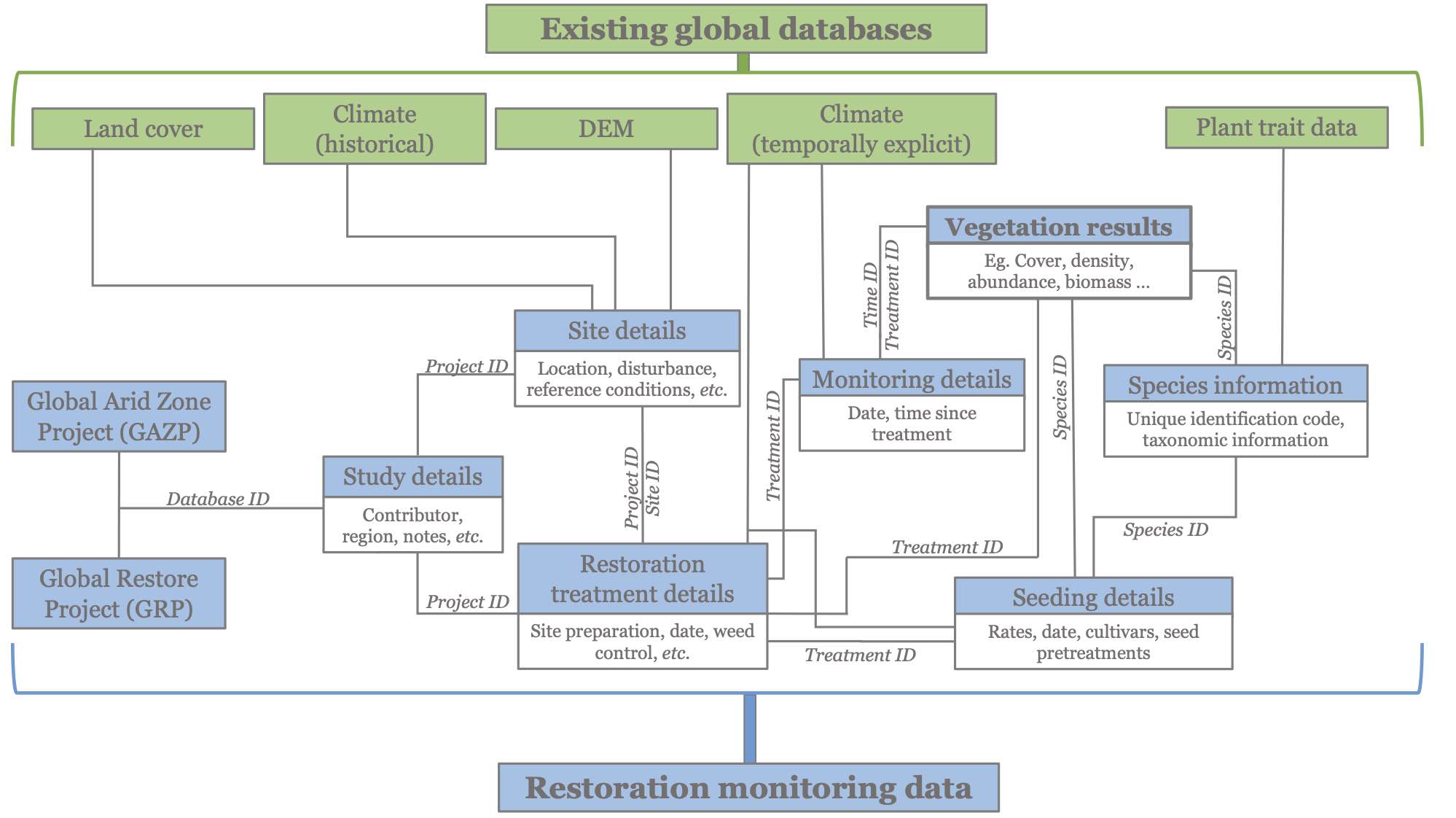
  <img src="https://globalrestoreproject.com/assets/images/Power_of_Synthesis_Figure_3.jpg" alt="" />
  <figcaption>Here we describe our data collection and harmonisation structure in blue, and our integration with other existing data resources in green.</figcaption>
</figure>

<h3 id="see-original-paper"><em>See original paper:</em></h3>
<ul class="notice">
  <li>Emma Ladouceur &amp; Nancy Shackelford <strong>2020</strong> <a href="https://onlinelibrary.wiley.com/doi/abs/10.1111/rec.13251">The power of data synthesis to shape the future of the restoration community and capacity</a> <strong>Restoration Ecology</strong></li>
</ul>]]></content><author><name>Global Restore Project</name></author><category term="Publications" /><summary type="html"><![CDATA[Emma and Nancy decided it was important to call for action to share restoration data and describe our effort to the restoration community. Our work found a home in the Restoration Ecology RE-New articles featuring communication pieces from early-career authors in restoration ecologty. Here we describe our data collection and harmonisation structure in blue, and our integration with other existing data resources in green. See original paper: Emma Ladouceur &amp; Nancy Shackelford 2020 The power of data synthesis to shape the future of the restoration community and capacity Restoration Ecology]]></summary></entry><entry><title type="html">The Global Restore Project (GRP) &amp;amp; The Global Arid Zone Project (GAZP)</title><link href="https://globalrestoreproject.com/about%20us/GRP_&_GAZP/" rel="alternate" type="text/html" title="The Global Restore Project (GRP) &amp;amp; The Global Arid Zone Project (GAZP)" /><published>2020-12-01T00:00:00+01:00</published><updated>2020-12-01T00:00:00+01:00</updated><id>https://globalrestoreproject.com/about%20us/GRP_&amp;_GAZP</id><content type="html" xml:base="https://globalrestoreproject.com/about%20us/GRP_&amp;_GAZP/"><![CDATA[<p>The Global Restore Project is a collaboration of restoration researchers using the power of data to deliver better outcomes for restoration ecology.</p>

<p>The recently declared <a href="https://www.decadeonrestoration.org/">‘Decade on Ecological Restoration’</a> by the United Nations represents a timely opportunity to develop a strong and integrative path forward for ecological restoration.</p>

<figure style="width: 300px" class="align-right">
  <img src="https://globalrestoreproject.com/assets/images/GAZP_SER_2019.jpg" alt="" />
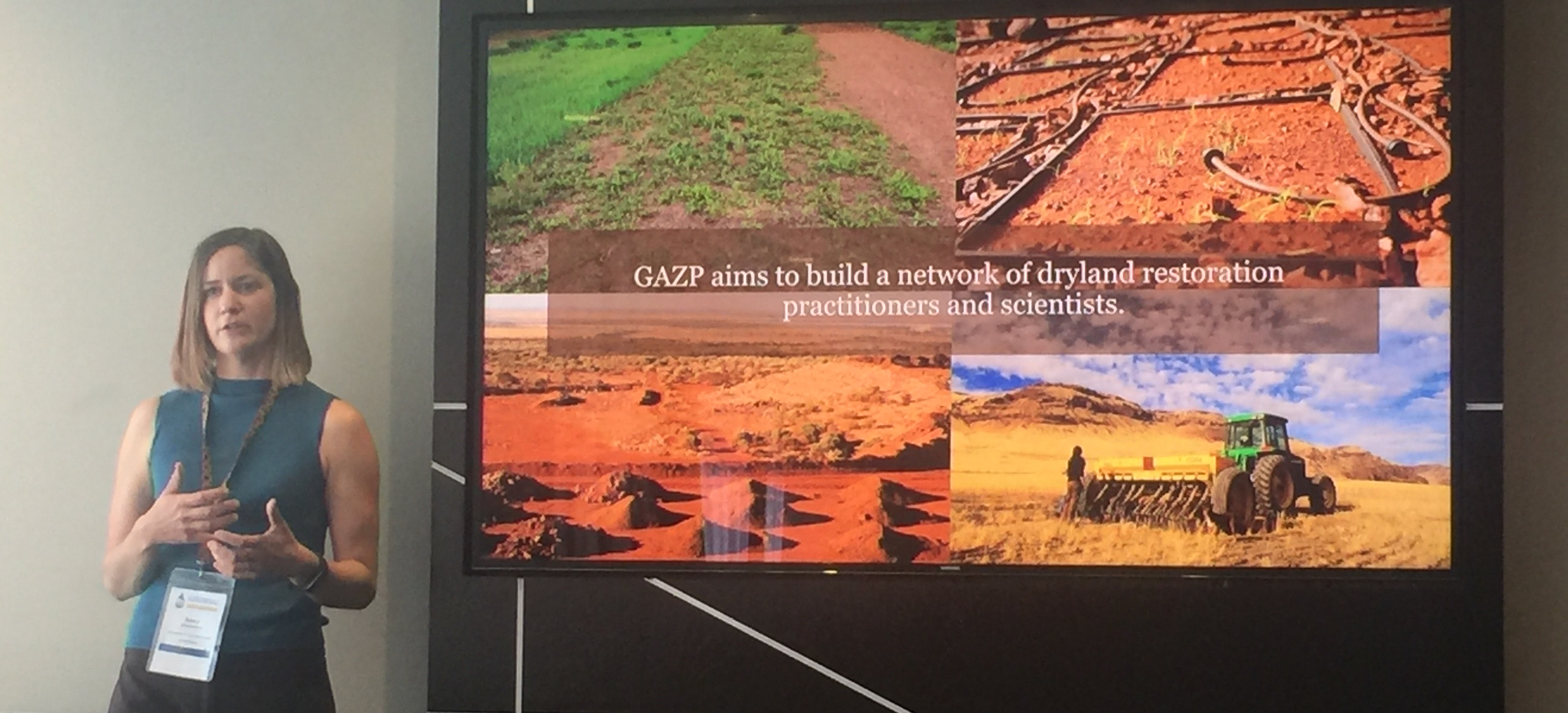
  <figcaption>Nancy presenting GAZP at SER 2019.</figcaption>
</figure>

<p>The Global Restore Project (GRP) aims to bring together restoration researchers globally to pool existing data and knowledge for a deeper understanding of restoration science. This took shape when <a href="https://www.idiv.de/en/profile/888.html">Emma Ladouceur</a>, Postdoc in the <a href="https://www.idiv.de/en/groups-and-people/core-groups/synthesis/people.html">Biodiversity Synthesis</a> &amp; <a href="https://www.ufz.de/index.php?en=38876">Physiological Diversity</a> groups was planning a restoration synthesis, and met <a href="https://www.uvic.ca/socialsciences/environmental/people/faculty/shackelford-nancy.php">Nancy Shackelford</a> when she was working with Katherine Suding at University of Colorado Boulder as  a Postdoc.</p>

<figure style="width: 300px" class="align-left">
  <img src="https://globalrestoreproject.com/assets/images/Octoberfest.jpg" alt="" />
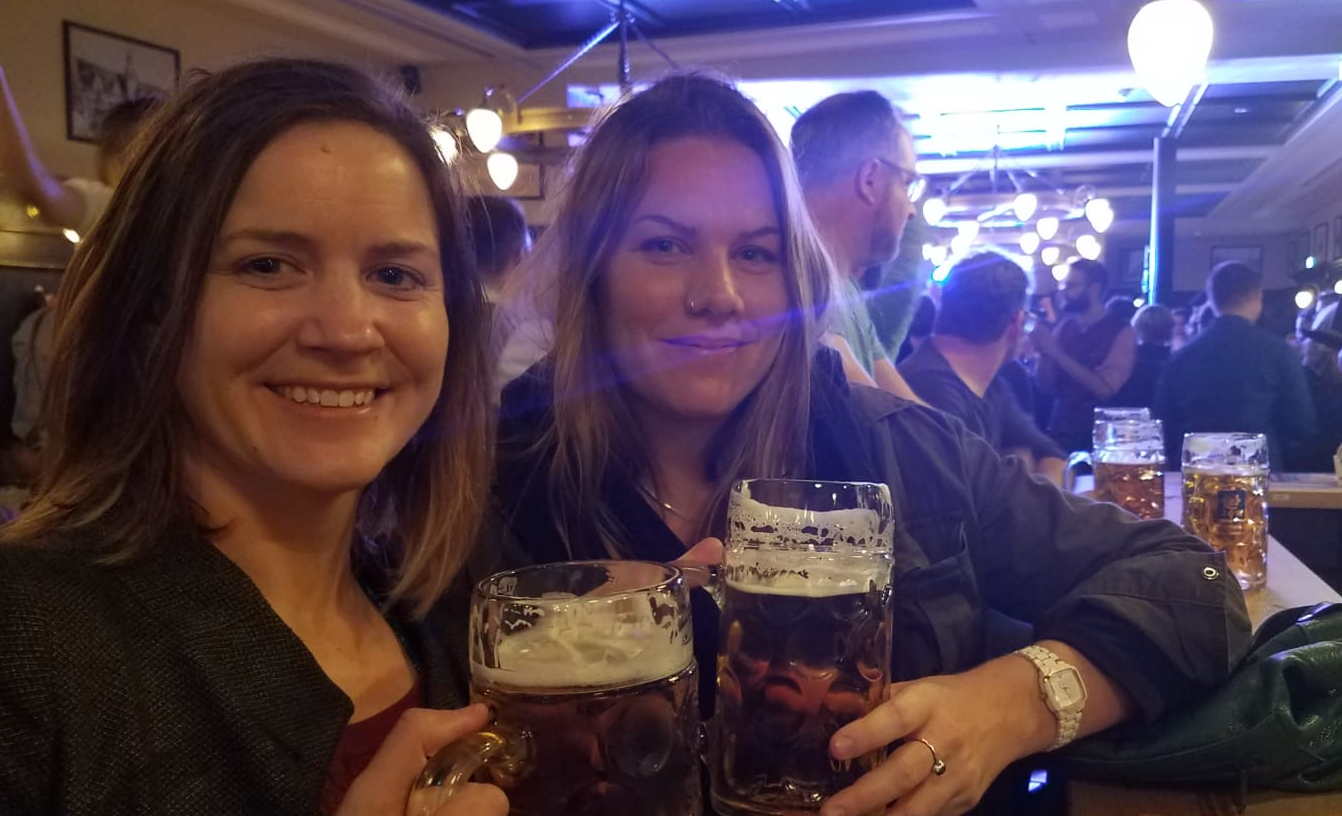
  <figcaption>Together in Leipzig October 2019.</figcaption>
</figure>

<p>Nancy was finishing up her first work with what she called the Global Arid Zone Project (GAZP), looking at <a href="https://doi.org/10.1038/s41559-021-01510-3">seed-based restoration outcomes in global drylands</a>. We decided to become collaborators. Emma proposed to focus on the rest of the global preciptation gradient, and projects which monitored full vegetation community outcomes. We’ve been working together ever since to bring all these data together.</p>

<p>Now Nancy is an Assistant Professor, head of the <a href="https://www.restorationscience.net/">Restoration Futures Lab</a>, and Director of the <a href="https://www.uvic.ca/socialsciences/environmental/restoration/index.php">Restoration of Natural Systems</a> at University of Victoria on beautiful Vancouver Island, Canada. Emma continues to work on this with the <a href="https://www.idiv.de/en/groups-and-people/core-groups/synthesis/people.html">Biodiversity Synthesis group at iDiv</a>.</p>

<h2 id="sign-up-for-our-newsletter">Sign up for our newsletter</h2>
<style>
    form.fi-nl-sub-form label { display:block;}
    form.fi-nl-sub-form label > span { 
      display: inline-block;
      width:120px;
    }
    form.fi-nl-sub-form input[type=submit] {
      margin-top:10px
    }
  </style>

<form onsubmit="checkConsent()" action="https://app.flashissue.com/subscribe/eFaG1MJn21" method="POST" class="fi-nl-sub-form">
    <label for="fi-mail"><span>E-Mail: </span><input type="text" required="" name="email" id="fi-email" /></label>
    <label for="fi-name"><span>Name: </span><input type="text" name="name" id="fi-name" /></label>
    <div>
      <label for="64dcdaf0e4b0f868ac56bcee">We send ~two to four updates per year.</label>
      <input required="" type="radio" name="64dcdaf0e4b0f868ac56bcee" value="agree" />  I Agree
      <input required="" type="radio" name="64dcdaf0e4b0f868ac56bcee" value="disagree" />  I Do Not Agree
    </div>
    <input type="submit" />
  </form>
<script type="text/javascript">
    function checkConsent(e) {
      if ((document.querySelectorAll("form.fi-nl-sub-form input[value=agree]:checked").length != document.querySelectorAll("form.fi-nl-sub-form input[value=agree]").length)) {
        alert("Please agree to our terms to sign up.");
        event.preventDefault();
        return false;
      }
    }
  </script>

<p class="notice"><img src="https://globalrestoreproject.com/assets/images/our_support.jpg" alt="image-center" class="align-center" /></p>]]></content><author><name>Global Restore Project</name></author><category term="About Us" /><summary type="html"><![CDATA[The Global Restore Project is a collaboration of restoration researchers using the power of data to deliver better outcomes for restoration ecology. The recently declared ‘Decade on Ecological Restoration’ by the United Nations represents a timely opportunity to develop a strong and integrative path forward for ecological restoration. Nancy presenting GAZP at SER 2019. The Global Restore Project (GRP) aims to bring together restoration researchers globally to pool existing data and knowledge for a deeper understanding of restoration science. This took shape when Emma Ladouceur, Postdoc in the Biodiversity Synthesis &amp; Physiological Diversity groups was planning a restoration synthesis, and met Nancy Shackelford when she was working with Katherine Suding at University of Colorado Boulder as a Postdoc. Together in Leipzig October 2019. Nancy was finishing up her first work with what she called the Global Arid Zone Project (GAZP), looking at seed-based restoration outcomes in global drylands. We decided to become collaborators. Emma proposed to focus on the rest of the global preciptation gradient, and projects which monitored full vegetation community outcomes. We’ve been working together ever since to bring all these data together. Now Nancy is an Assistant Professor, head of the Restoration Futures Lab, and Director of the Restoration of Natural Systems at University of Victoria on beautiful Vancouver Island, Canada. Emma continues to work on this with the Biodiversity Synthesis group at iDiv. Sign up for our newsletter E-Mail: Name: We send ~two to four updates per year. I Agree I Do Not Agree]]></summary></entry></feed>